
The question I have for myself today is: Am I right to hate this or is this actually a good thing for my city? Let’s get into my stream of consciousness:
Walking down my street, I noticed a sign. It’s been there for a long time, looming over the unofficial public square of Lagunillas. But today it made me mad.
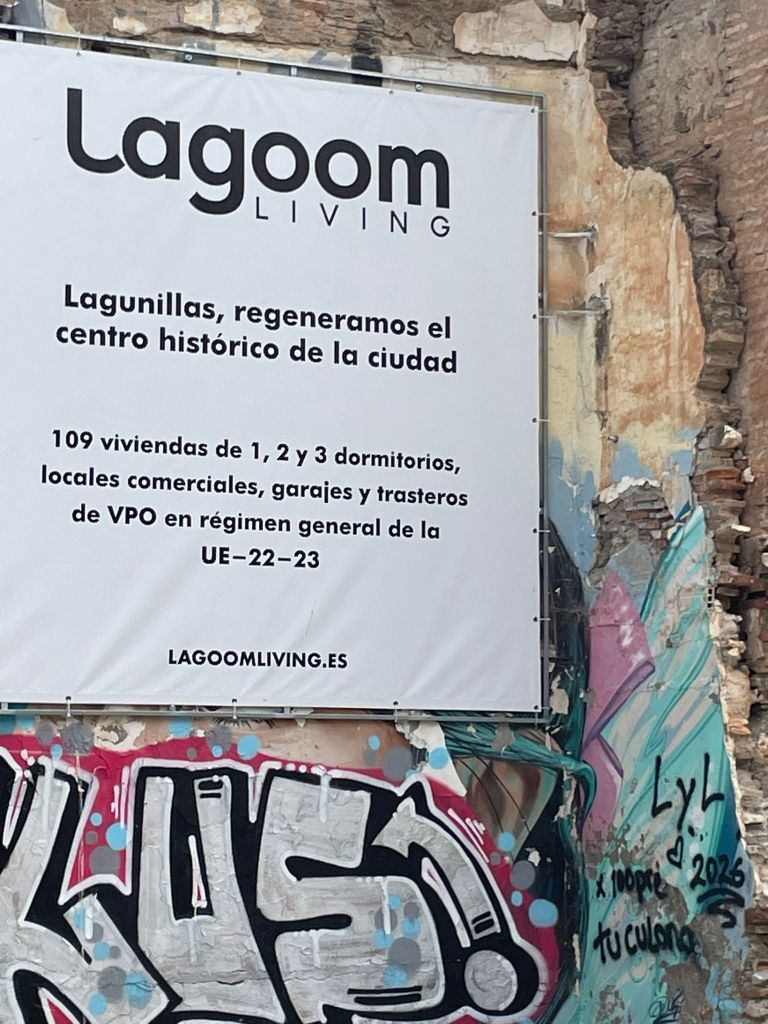
“Lagunillas, regeneramos el centro historico de la ciudad.”
Una polla.
Let’s have a look at what “regenerar” means.
Regenerar significa dar nuevo ser, restaurar, mejorar o rehabilitar algo deteriorado (tejidos, zonas urbanas, materiales).
So I would assume that the proposed plan for buildings here will be consistent with historical architecture, since, as you said, you’ll be regenerating the “historical center of the city.” Right?
Right?
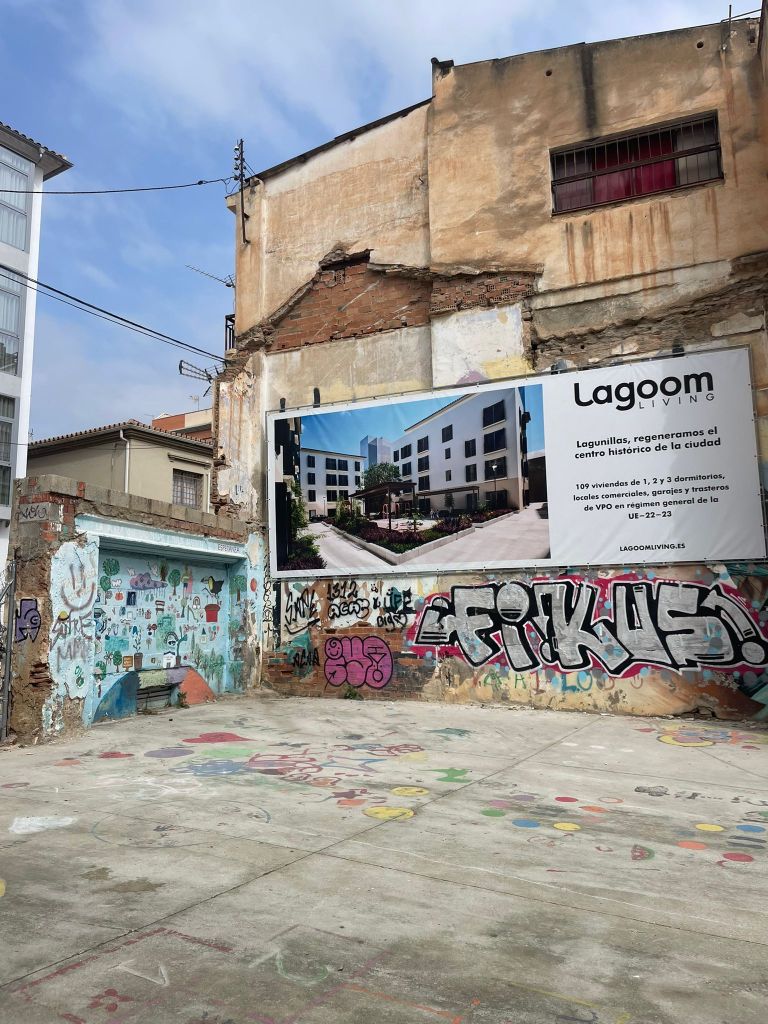
Wrong. What you are here to do is build modern looking apartment buildings devoid of personality or any hint of historical anything. This is a problem that Malaga has been suffering for a while. To be clear here, this isn’t about any particular real-estate investment company, its about the tendency in general.
Lagunillas is a barrio that, if given a hint of a shit about, could be fostered into a true alternative, artistic center of the city. A place where the existing residents will not be priced out, while still being given dignified living options. Lagunillas and its intimate neighbor Cruz Verde are “historically” low-income parts of Malaga, so the dangers of being priced out is real as well.
“But the planned building is VPO”.
Okay, and? I was unaware VPO needed to be the bastard love-child of Soviet housing blocks and Scandinavian Ikea-style apartments. I was unaware that was even historically Spanish. There are plenty of examples of VPO housing in Malaga that seems…well… Mala-f*ckin-gueño. And not guiri-f*cking-landia. But I digress.
And maybe these buildings DO need to look like this and I am just ignorant. Since private equity needs to be able to make a buck, they need to make sure things are minimalistic (scandi-style) and functional (soviet).
While no one can deny that Lagunillas is in disrepair, it doesn’t mean it deserves to be mowed down and replaced with a black and white abomination of a building that is really meant to make tourists feel safe when they inevitable rent it out.. ultimately, feeding the bitter cycle that pushes Malagueños out of their own city.
So I started looking around to see what else was about to be regenerado.
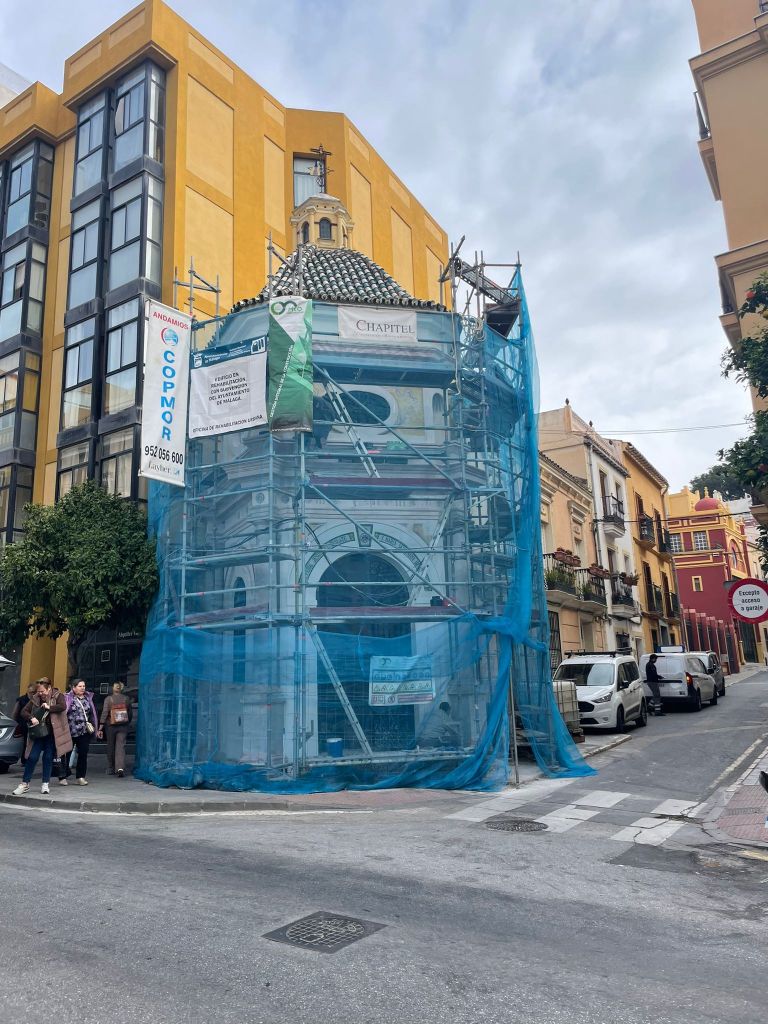
The Capilla on Calle Agua is in full restoration mode. Could you imagine what would happen if they decided to make this historic building the same garbage as in Lagunillas?
What about this building on the same block? Will they tear it down? Does it deserve to stay standing? Do people actually want the modern buildings? Is it just me that finds this trend unsettling and white-washing?
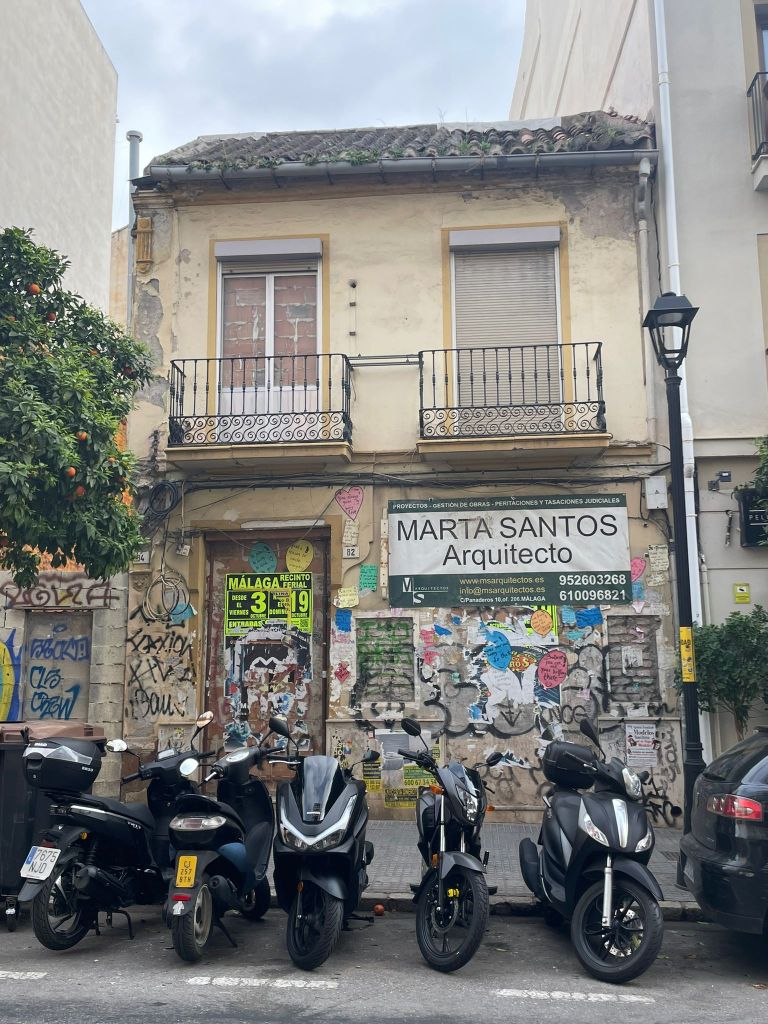
Looking at these buildings I start to doubt myself. Here I am assuming regeneration means mostly architectural imitation of historical styles. But this can also mean things like:
- Improving safety
- Updating infrastructure
- Increasing energy efficiency
- Making housing structurally sound
- Meeting accessibility codes
- Providing affordable housing
And that is the part that I think we need to assess here as well.
I am going to assume out the gate that these projects are structurally sound, accessible, and have improved infrastructure. Not bad. In fact, good aportations.
So I will ask the following:
- Do these types of projects actually provide affordable housing long-term?
- Does this improve the safety of the neighborhood?
- Are these buildings sustainable long term or will they suck the soul out of the city?
- Will it just lead to more fast-food shops opening to accommodate tourists instead of long-term living?
- Does private-equity have the residents best interest in mind? Or just their investors?
Housing in Malaga has become a sort of international investment commodity. So can we really blame private-equity for playing ball?
Can someone more qualified than me answer?
Because I get that cities are living organisms, and not museums. And that…if every “regeneration” required aesthetic replication of the 19th century, things would get weird. But thats a simplification of my worry. It goes deeper than architecture. It actually goes into how communities are impacted; architecture just being a symptom or show of cultural awareness.
Isn’t there some kind of happy medium where the city is made for the people and the culture it currently has? Not some ideal looking facade designed by Northern Europeans? Something that will benefit the residents long-term?
Or maybe these houses are actually just built for the Northern Europeans given that housing in Malaga is increasingly detached from permanent residency anyway. Maybe this is what we need when instead of community, things are just increasingly transient.
And no, modern architecture is not automatically anti-historical. It can reflect our era, and I do believe this architecture does. It reflects how far we have come with capitalism, globalization, and neocolonialism.
So maybe its not so bad after all.
Anyway. Let me wrap it up by saying:
Regenerar also means:
Hacer que alguien abandone una conducta o unos hábitos reprobables para llevar una vida moral y físicamente ordenada
Me encantaría ver a Málaga redefinir sus valores y expectativas en torno al desarrollo urbano, para evitar que el capital privado impulse proyectos orientados únicamente al beneficio económico a corto plazo, con poca consideración por sus consecuencias socioeconómicas y culturales a largo plazo. Que sea o no arcitectura nordosoviético…. escandisoviético….whateverthefuckosea…el hijo bastardo entre el bloque soviético y un catálogo de IKEA.
 Kylbasa
Leave a comment